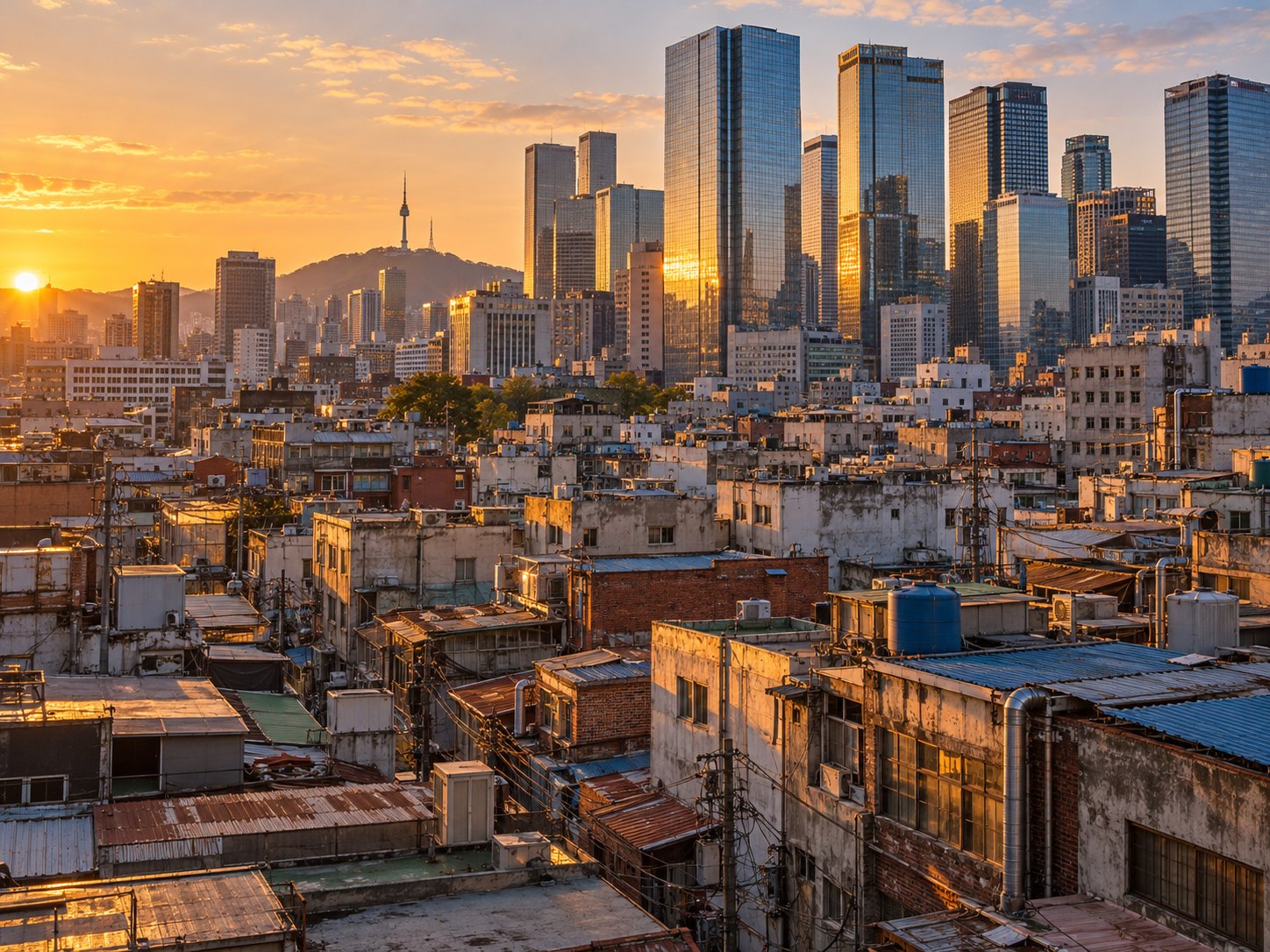
Euljiro is a working district first and a nightlife area second. For decades it has been where Seoul gets its printing, paper, lighting and hardware, and for the past several years young cafe and bar owners have been moving into the old buildings. The result is a neighborhood where a paper-cutting workshop and a cocktail bar can share a stairwell. People nicknamed it Hip-jiro, a play on the English word hip.

- Best time: late afternoon into the evening. The workshops wind down and the cafes, bars and food alleys take over.
- Nearest stations: Euljiro 3-ga (Lines 2 and 3), plus Euljiro 4-ga (Lines 2 and 5) and Euljiro 1-ga (Line 2).
- Time needed: two to four hours, longer if you plan a meal and a drink.
- Check first: many small places close on Sundays, Mondays or Tuesdays, and hours change often. Look at the current listing on Naver Map or Kakao Map before you walk over.
1. Getting there
Euljiro 3-ga Station, on Lines 2 and 3, is the easiest starting point. Local listings point to Exits 9 and 10 for most of the sights and Exit 11 for the food alley area near Cheongwaok. Exit numbers can differ between sources, so confirm with the signs inside the station or a map app before you climb the stairs.
The district is also a short walk from Myeongdong and from Cheonggyecheon, so it pairs well with the Myeongdong guide or an evening walk along the Cheonggyecheon stream. For fares and transfers, see the transportation guide.
2. What Euljiro actually is
It helps to think of three layers on the same streets.
- The industrial layer. Print shops, paper suppliers, lighting and hardware stores. This part works during the day, and it is the reason the buildings look the way they do.
- The old-restaurant layer. Family-run places that have served workers for decades: cold noodles, soups, pork bone stew and simple lunch sets.
- The new layer. Cafes, craft beer bars, wine and cocktail spots and small studios, often on upper floors or behind plain doors.

You can see all three in one walk. Go in daylight for the first layer, at lunch or early dinner for the second, and after dark for the third.
3. Nogari Alley
Nogari Alley (Euljiro 13-gil) is the best-known drinking spot in the area. The name comes from nogari, semi-dried young pollack that is torn by hand and eaten with beer. The tradition began with print-industry workers stopping for a cheap drink after work. Small tables spill out into the alley, and on summer evenings it gets very crowded. Listings put its opening hours at roughly noon to midnight, but individual shops vary.

4. Hidden entrances and upstairs bars
A lot of the newer places in Euljiro do not announce themselves at street level. You may find them up a narrow stair, on a rooftop, behind an unmarked door, or, in one well-known case, through a door disguised as a beer vending machine at a pub called The Ranch Brewing. Opening days and times for these places change, and some listings disagree with each other, so check before you go and have a backup plan nearby.

5. Old restaurants worth knowing
If you want food that predates the trend, these long-running names come up repeatedly in local listings.
| Place | Known for | Note |
|---|---|---|
| Sarangbang Kalguksu | Knife-cut noodle soup, set meals | Open since 1968 according to listings. Lunchtime lines |
| Pyeongnaeok | Pyongyang-style cold noodles, chilled chicken soup | Open since 1950 according to listings. Often a line, and a mid-afternoon break |
| Woo Lae Oak | Pyongyang-style cold noodles | Listings show it closed on Mondays. Expect a wait |
| Cheongwaok | Sundae-gukbap (blood sausage soup) | Near Exit 11. A bowl was about 8,000 to 9,000 won in older listings |
| Dongwonjip | Gamjatang (spicy pork bone soup) | Listings show it closed on Sundays |
Prices in older write-ups run from about 7,000 won for a noodle soup to the mid-teens of thousands for a bowl of Pyongyang-style cold noodles, but they rise over time, so treat them as a rough range rather than a menu.
6. Cafes in old buildings
Euljiro cafes tend to keep the rough walls, big windows and worn floors of the original buildings. One example often mentioned is Coffee Hanyakbang, styled like an old herbal medicine shop and tucked down a side street. Many cafes close earlier than the bars, so aim for mid-afternoon.

7. Sewoon Arcade
Sewoon Arcade, opened in 1968 as Sewoon Plaza, was Korea’s first large electronics market. It still has electronics and tool shops, now alongside cafes and small independent stores. It is a good place to see how the district has changed, and it sits close to the Jongno end of the area.
8. A simple half-day route
- Mid-afternoon: walk the printing and hardware streets and Sewoon Arcade while the workshops are still open.
- Around 5 pm: early dinner at one of the old restaurants, before the evening lines build.
- Sunset: coffee or a drink somewhere upstairs.
- After dark: a snack and a beer in Nogari Alley, then head back to the station while the trains are still running.

9. Practical notes
- Cards are widely accepted, but keep a little cash for the smallest stalls.
- The streets are narrow and shared with carts and delivery motorbikes, so walk with care.
- The industrial streets are quieter at weekends, because many workshops close. That is fine for photos, but check what is open.
- Download a map app before you go. See the apps and phrases guide.
Who it suits, and who might skip it
Euljiro rewards people who like wandering without a fixed list and are fine with rough edges. The alleys are narrow, many bars and cafes are on upper floors reached by steep stairs, and the best spots are small, so it can be difficult with a wheelchair, a stroller or heavy luggage. If you want polished, well-signed attractions, Myeongdong or Gyeongbokgung will be easier. If you want to see a working part of the city that is changing, this is a good place to spend an evening.
FAQ
Is Euljiro good for a first-time visitor?
Yes, if you want a side of Seoul that is not shopping streets or palaces. It works best as one stop on a day that also includes Myeongdong or Cheonggyecheon.
When is Euljiro busiest?
Friday and Saturday evenings, especially in summer. For a quieter visit, go on a weekday late afternoon.
How long should I spend there?
About two to four hours, or an evening if you plan to eat and drink.
Opening hours, prices and even the existence of small shops change often in this district. Details here come from local listings and recent write-ups, and some figures are from older sources. Confirm on a current map listing before you go.
Leave a Reply