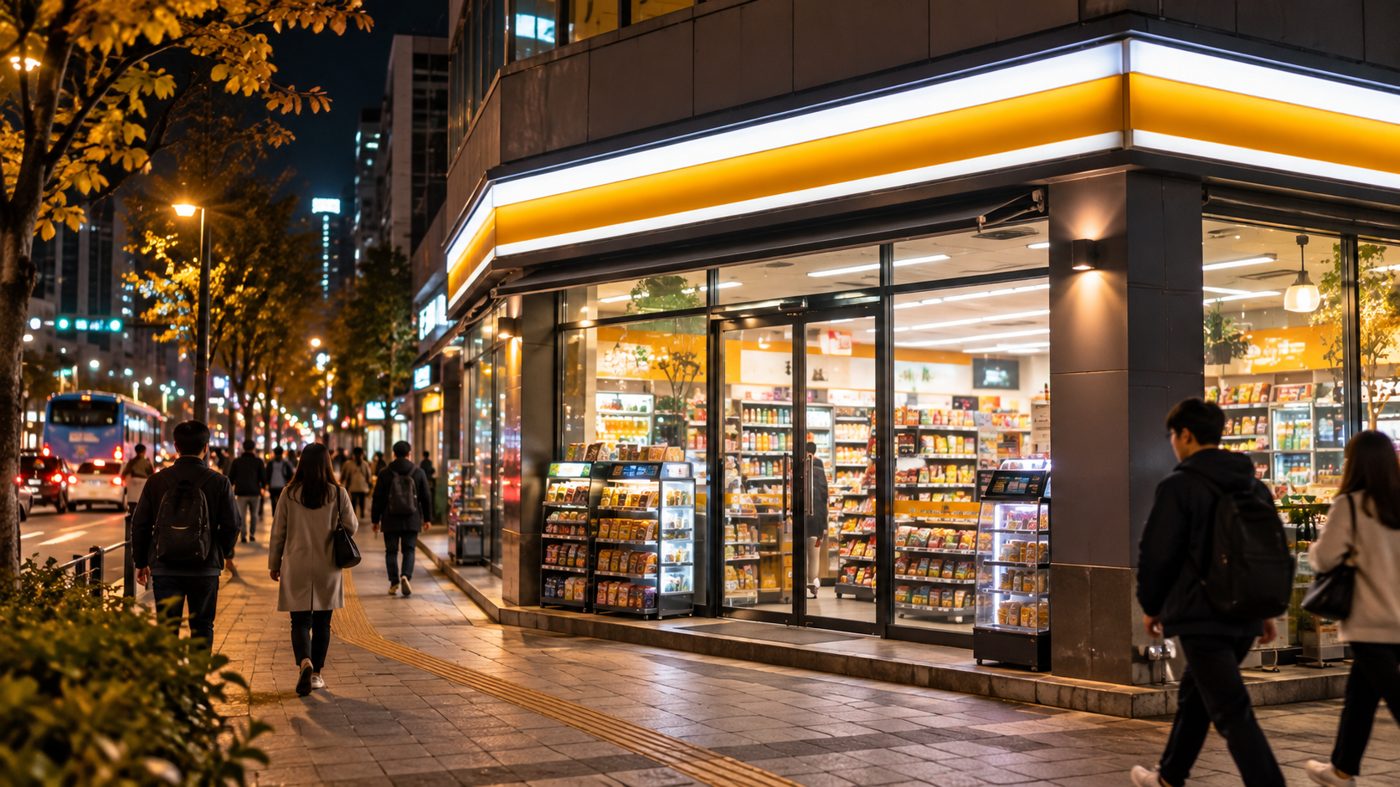
Korean convenience stores are a different thing from the corner shops many visitors are used to. They are open at all hours, they sell proper meals, and many travelers end up eating at one at least once a day without really planning to. The part that catches people out is the small stuff: where the hot water is, whether you pay before or after you heat something, and which of the things on the counter you can actually use as a visitor.
This guide covers what to buy, how to heat and eat it, the services that matter on a trip, and the mistakes that come up most often. For prices and budgeting more broadly, see our Korea money guide, and for convenience store drinking late at night, see the Seoul nightlife and drinking guide. This page sticks to food and services.

1. The Names You Will See
The four big chains are CU, GS25, 7-Eleven and emart24. You will also see smaller ones, such as Story Way and 365plus. For a visitor, the differences between them are small. Each has its own exclusive snacks and meal boxes and its own seasonal promotions, but the basics are the same, so go to whichever is closest.
Most stores are open 24 hours, which is one of the reasons they are so useful. A few, such as ones inside offices, schools or hospitals, keep shorter hours, so do not assume every store is open at 3 a.m.
2. What to Buy First
| Item | What It Is | Good to Know |
|---|---|---|
| Triangle kimbap | A rice triangle with a filling, wrapped in seaweed | The plastic wrapper keeps the seaweed dry and the rice separate. Follow the numbered pull tabs, in order |
| Kimbap roll or lunch box (dosirak) | A sliced rice roll, or a boxed meal with rice and sides | The fastest cheap meal. Staff can usually heat boxed meals |
| Cup ramen | Instant noodles in a cup or bowl | Make it on the spot with the hot water at the store |
| Banana milk | A sweet, mild flavored milk in a squat bottle | Popular with visitors, so it is easy to find and easy to try |
| Hot case snacks | Fried chicken, sausages or buns in a warmer | Only some stores have this, and the selection varies |
| Canned coffee and drinks | Ready-to-drink coffee, teas and juices | The chilled section is large, so look at the labels and pictures |
Prices are usually a few thousand won or less per item, and shelf tags show the exact amount. Many stores run “1+1” and “2+1” deals, which means buy one get one free, or buy two get one free. If you see a sticker like that on a drink or snack, it is often the cheapest way to stock up.

3. Making Cup Noodles and Eating In

This is the part many first-timers miss. Most stores have a hot-water dispenser next to a small counter, and the process goes like this:
- Pay for the cup first. Take it to the register, then bring it back to the counter.
- Peel the lid back to the line printed inside the cup, open the seasoning packets, and add them.
- Fill with hot water from the dispenser up to the line. It is hot, so go slowly and keep the cup low.
- Close the lid and wait. The package gives the time, often around three minutes, but it varies by product.
- Pick up chopsticks from the container nearby, and eat at the counter or a table.

Many stores have a counter along a window, or a few tables inside or outside. You do not need to ask to sit there if you bought something. Clean up after yourself, and put your rubbish in the bins the store provides. If you cannot find the right bin, ask staff and do not leave it on the counter.

4. Heating Food
The microwave is usually free to use. Staff can often heat boxed meals for you, or you can use it yourself if it is next to the counter. Packaging can differ, so if you are not sure whether a lid or a wrapper should come off, ask. A plain gesture toward the microwave and the food works fine. Do not put anything with metal in it.
5. Services That Matter on a Trip
- T-money transit card. Most chains sell the card and top it up, and top-ups at the counter are generally in cash. Our transportation guide covers how to use it and what to do with the leftover balance.
- ATMs. Many stores have one. Foreign cards work at some and not others, and fees apply, so check the machine screen before you confirm.
- Parcels. Many stores partner with couriers for sending packages. This is mainly useful if you are staying a while, and the details differ by store, so ask at the counter.
- Phone charging and wifi. Some stores have charging spots or free wifi, but do not count on either.
- Tax-free shopping. A few stores display a TAX FREE sign, but a refund usually needs a minimum spend per purchase, so it is rarely worth planning around for snacks.

6. Payment, Unmanned Stores and ID
Cards and mobile payments are accepted almost everywhere, but a card issued overseas occasionally fails at a small shop. Carry a little cash as a backup. Bags usually cost a small extra charge, so carry your own.
Some stores are unmanned, with self-checkout and entry by card or QR code. If you are buying something that needs age verification, such as alcohol, there is usually a call button for staff. Keep some form of ID handy, since staff can ask to see it.
7. Common Mistakes
- Making ramen before paying. Pay first, then use the hot water.
- Filling past the line. It makes the broth watery and is easy to spill.
- Expecting to top up a transit card with a foreign card. Carry cash.
- Leaving rubbish on the counter. Use the bins or ask staff.
- Assuming every store is open 24 hours. Stores inside buildings can close.
- Buying a drink without reading the label. Some look like water or juice but are sweet or carbonated.
8. FAQ
Can I eat inside a convenience store?
Yes, in most stores with a counter or tables. If a store has no seating, take it with you.
Do I need cash?
Not for most purchases, but yes for topping up a T-money card, and it is a good backup if a card is refused.
Is it a real meal or just a snack?
It can be a real meal. Kimbap, a boxed meal, ramen and a drink make a full, cheap breakfast or late dinner.
Which chain is best?
There is no clear winner. Pick the closest one, and try a different chain’s exclusive snacks if you are curious.
Note: Store services, hours, promotions and prices change, and they vary by branch. Check the chain’s official page or ask at the counter if something matters for your plans.
Leave a Reply